


A government shutdown occurs when Congress fails to pass a budget or short-term funding bill to keep federal agencies running. Without that funding, the Antideficiency Act (ADA) requires many government functions to pause until a deal is reached.
While shutdowns vary in length, they can cause financial stress for federal workers, disrupt services, and create short-term economic ripple effects.
• Essential services continue: National security, air traffic control, law enforcement, and Social Security/Medicare payments typically keep running.
• Federal workers: Many are furloughed (sent home without pay until the shutdown ends), while essential employees may work without immediate pay.
• Public impact: National parks and museums often close, some benefits and permits are delayed, and discretionary programs like research grants or WIC nutrition assistance may pause.
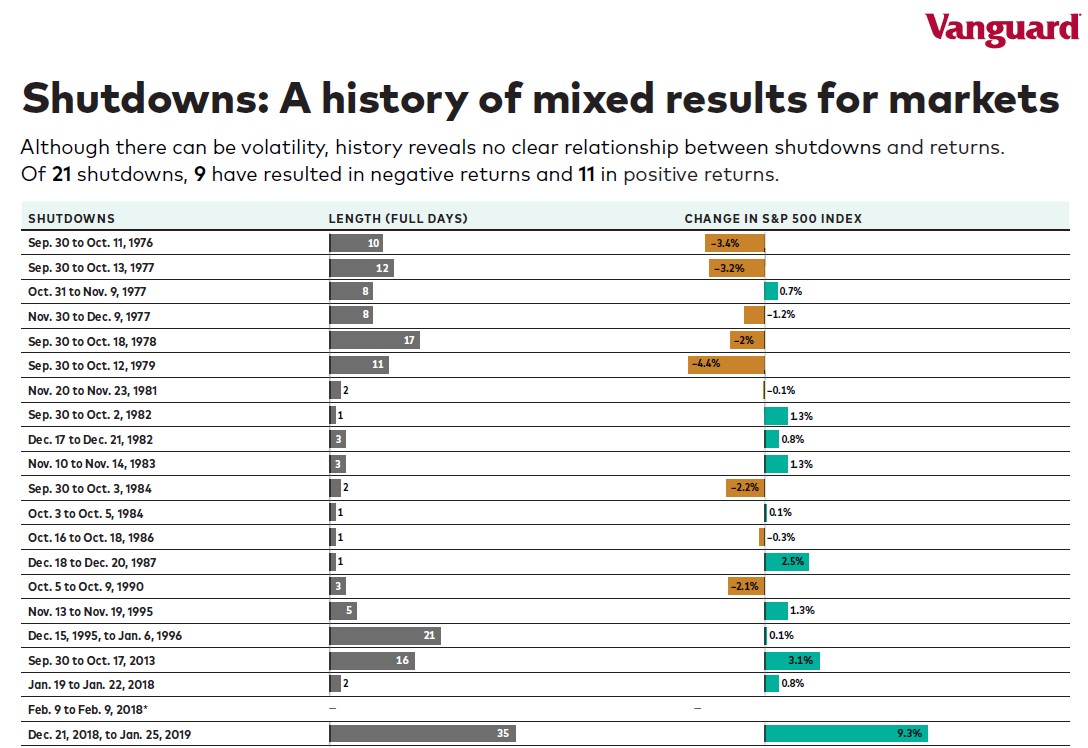
Overall, government shutdowns don’t typically impact the stock market in any significant way. In fact, in a study done by Vanguard - out of the last 21 government shutdowns, the S&P 500 has been positive during 11 of the 21 shutdowns.
Tennessee does not tax wages, investment income or retirement income. Here is how that changes Roth decisions, relocation choices and retirement planning.

CFP®, CFA, ChFC, CPA and more: what the letters after an advisor's name actually mean and how to verify them.

A comprehensive financial plan covers cash flow, retirement, investments, taxes, insurance, education and estate planning. Here is what each part should do.